The 914 mm sheet
The roll is wide enough for a lane to stay on one line. When it will not, the break is a decision, not an accident of the page.
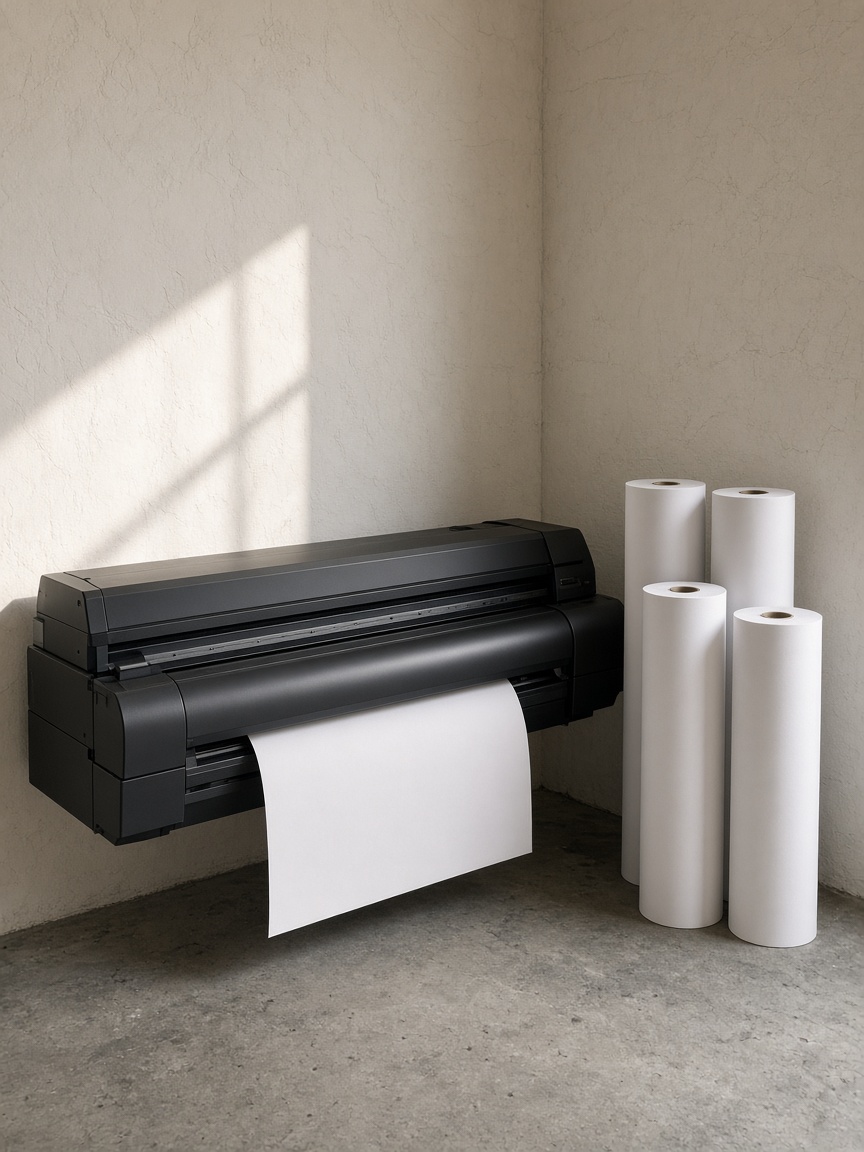
We plot at 914 mm because that is the roll on the machine in the corner, and because a swimlane read at arm’s length wants the width. A map squeezed onto an office page becomes a diagram people nod at and do not mark. The review happens on paper, on the wall, with a second color. The plotter is how that wall leaves the studio.
A lane that will not fit is split at a handoff, never in the middle of a step. The next sheet starts with the receiver, and the margin says which sheet it continues. We do not shrink the type until the boxes are polite. If the job needs three sheets, it needs three sheets. The scenario note, which is short, stays on ordinary paper and names the sheets.
What may sit in the margin: a nickname the staff use for a cabinet, a claim from the manager that the cards did not support, the name of a system we saw open, and the date of the visit that confirmed a wait. What may not: a target time we were asked to invent, a future layout, a headcount. Those, if they are done at all, are a separate sheet with a different heading, printed after the as-is is agreed.
The draft on the wall is not the roll. Monday is when corrections from a Thursday review are plotted. If the marks are still ambiguous, we do not guess in the machine. We call. A wrong box on a beautiful sheet is worse than a late sheet, and the date moves in writing.
Clients sometimes ask for a file only, no paper. They get the file, and they still get the roll, unless the engagement note says the workplace cannot hold a sheet. In a yard or a cellar the roll is often the only version that survives the month. Screens get replaced. The sheet stays on a nail.
The plotter does not run during a review. The sound makes people hurry. We print before 08:40, pin the sheet, and leave the rolls alone until the second color is dry enough to read.