Each file below is the as-is: what we saw, what was handed back, and the date the sheets left str. București. Client names stay off this page.
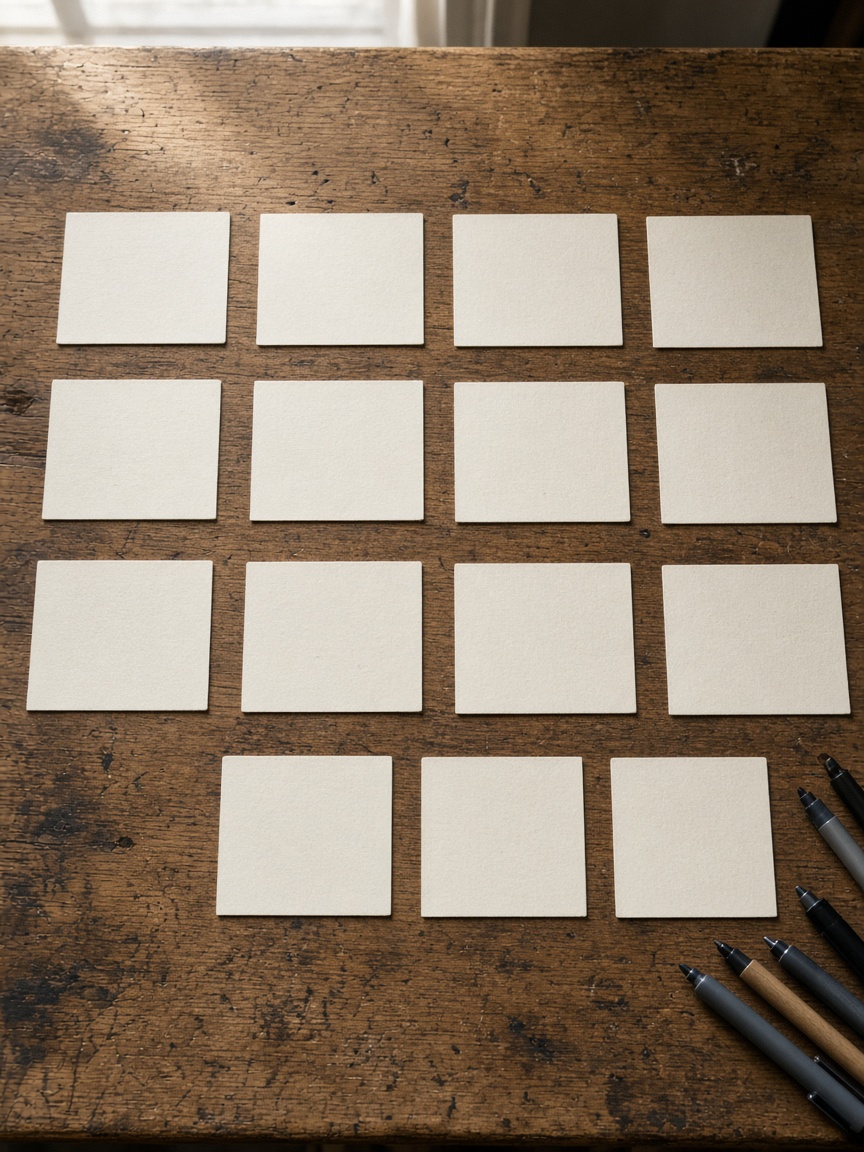
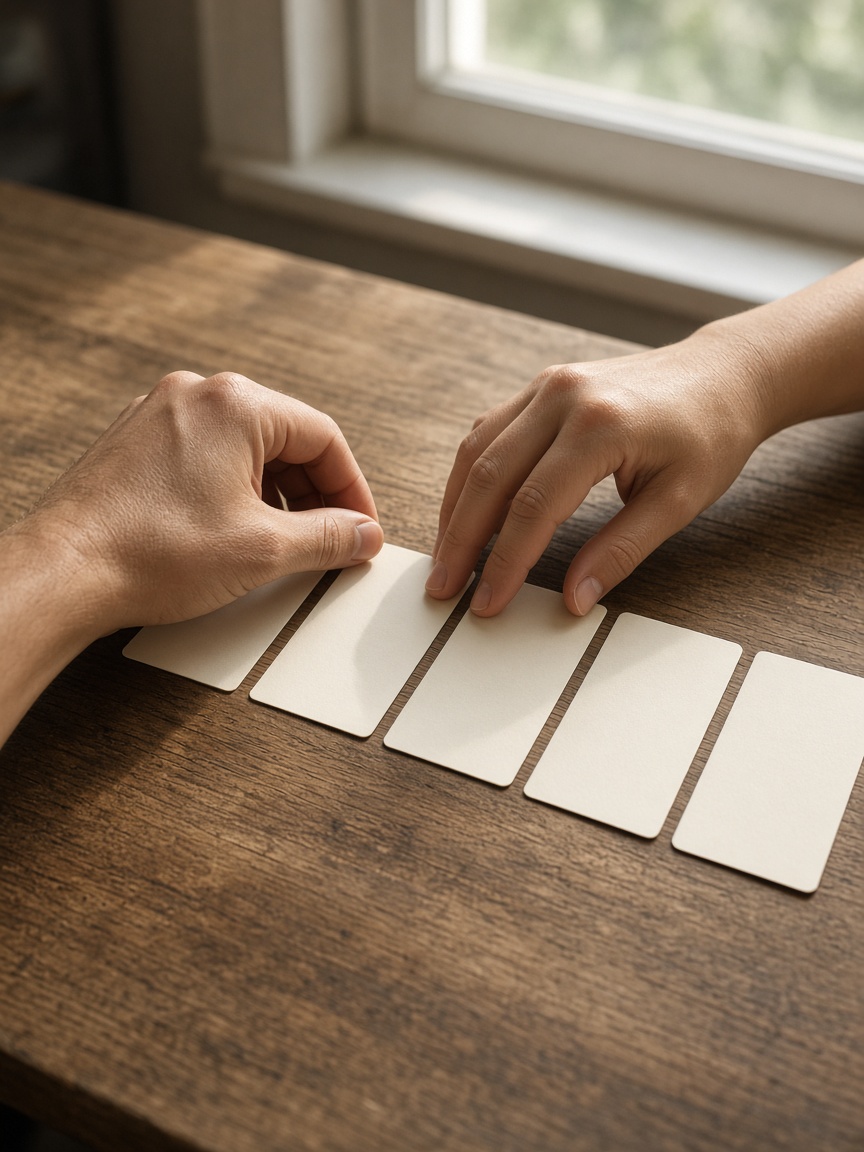
Card columns for the weighbridge map, still on the table the week the sheets were plotted.
Weighbridge to tank
Sheets left the studio on 7 April 2026. The map starts at the scale, not at the cellar door.
Trucks from Codru arrive in a bunch after lunch and again after dark. The person on the scale writes a weight. Someone else, twenty metres on, takes a sample for the lab. The lab ticket and the weight do not always meet before a tank is chosen. That gap was the reason for the map.
We walked two receptions: a dry afternoon, and a wet evening when the queue of trucks reached the road. Fourteen lanes came out of those two visits. Most of them are short. The long ones are the lab and the night decision, when the person who assigns the tank is not the person who saw the grapes.
The cards stayed on the studio table for six working days. Roles were rewritten twice because the first draft used the cooperative’s job titles, and two of those titles were the same person on a shift. The board in the hall carried rectangles only until the second visit confirmed which waits were real. The wait that mattered was the lab ticket. It was longer than the unloading.
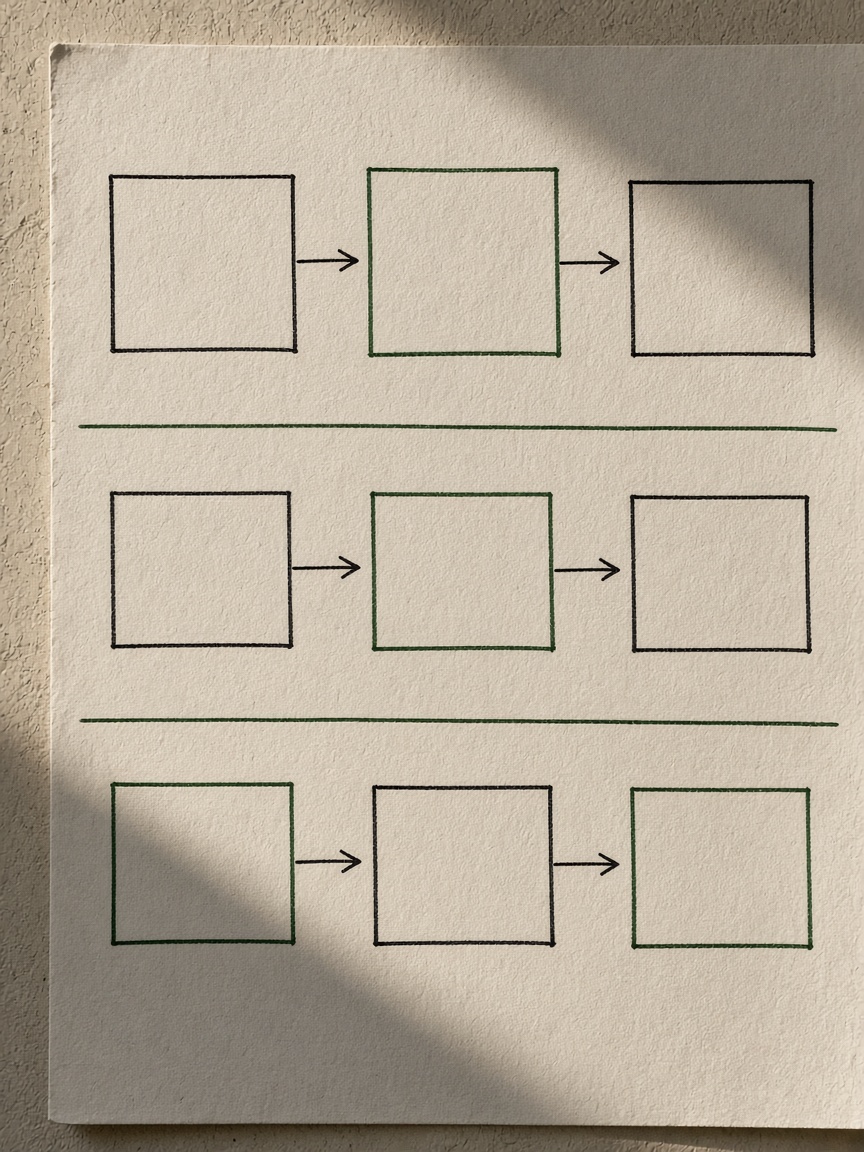
The client took a plotted swimlane at 914 mm, a model of the agreed lanes, and a scenario note with the straight path, the wet-evening queue, and the missing ticket. We did not draw a future layout of the yard. That was the agreement on the first call.
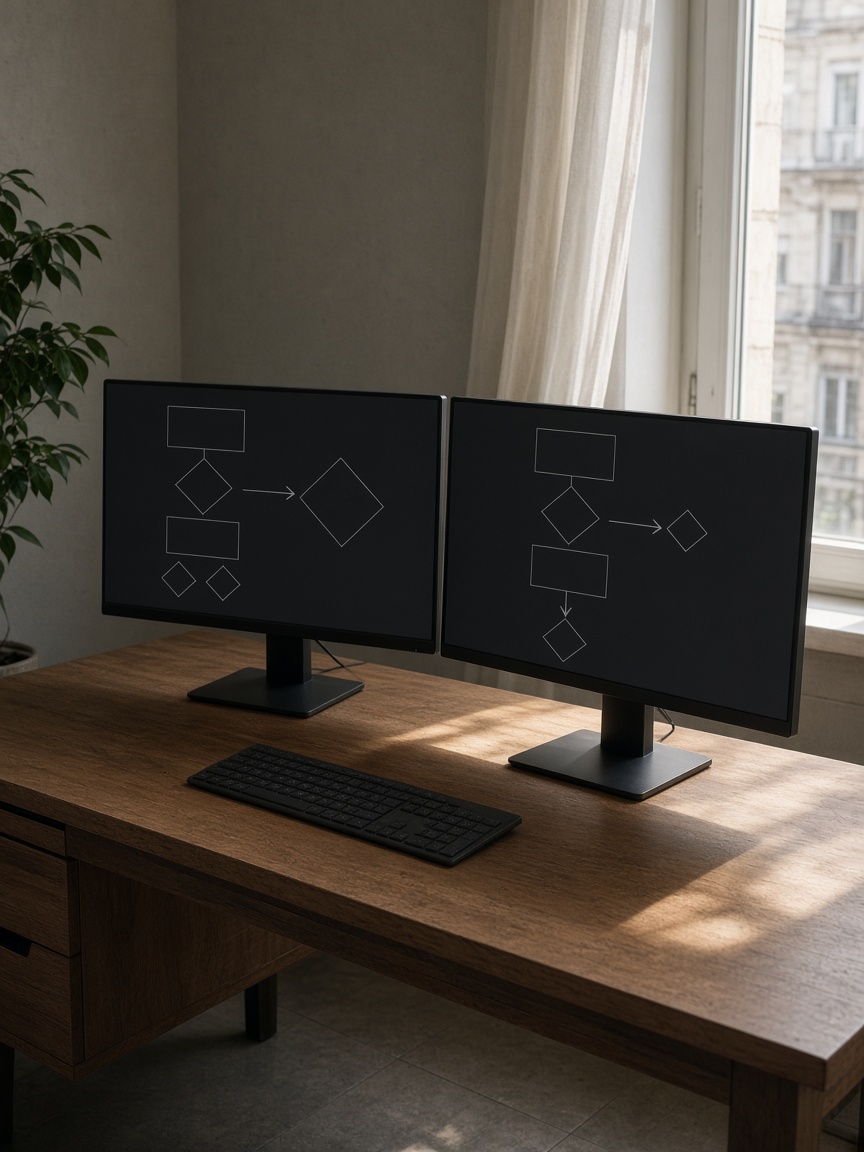
The model for window 4, opened only after the clerk had marked the paper draft.
Window 4
A sector counter in Centru. The plotted set left on 11 February 2026.
People take a ticket and wait for window 4, which is not always the window that can finish their file. Two screens sit on the desk. One is the register the clerk trusts. The other is the one the procedure names. A paper file still goes upstairs.
We stood at the queue on a Tuesday and a Thursday in January. The Thursday was the useful one: a senior clerk was absent and the handoffs changed. The map shows both days, with Thursday as the exception path rather than a footnote. The shelf on the third floor is a step, because files wait there longer than they wait at the window.
The model was opened only after the clerk who actually works window 4 marked the draft on our wall. She changed four boxes. The manager changed one, and then changed it back when he saw her marks. That review is why the sheet can be used by someone who was not in the room.
The set includes the straight application, the return of an incomplete document, and the path when the second screen is down and the paper register is the only record. We did not propose a new window layout. The counter is the counter. The map shows where the file actually goes.
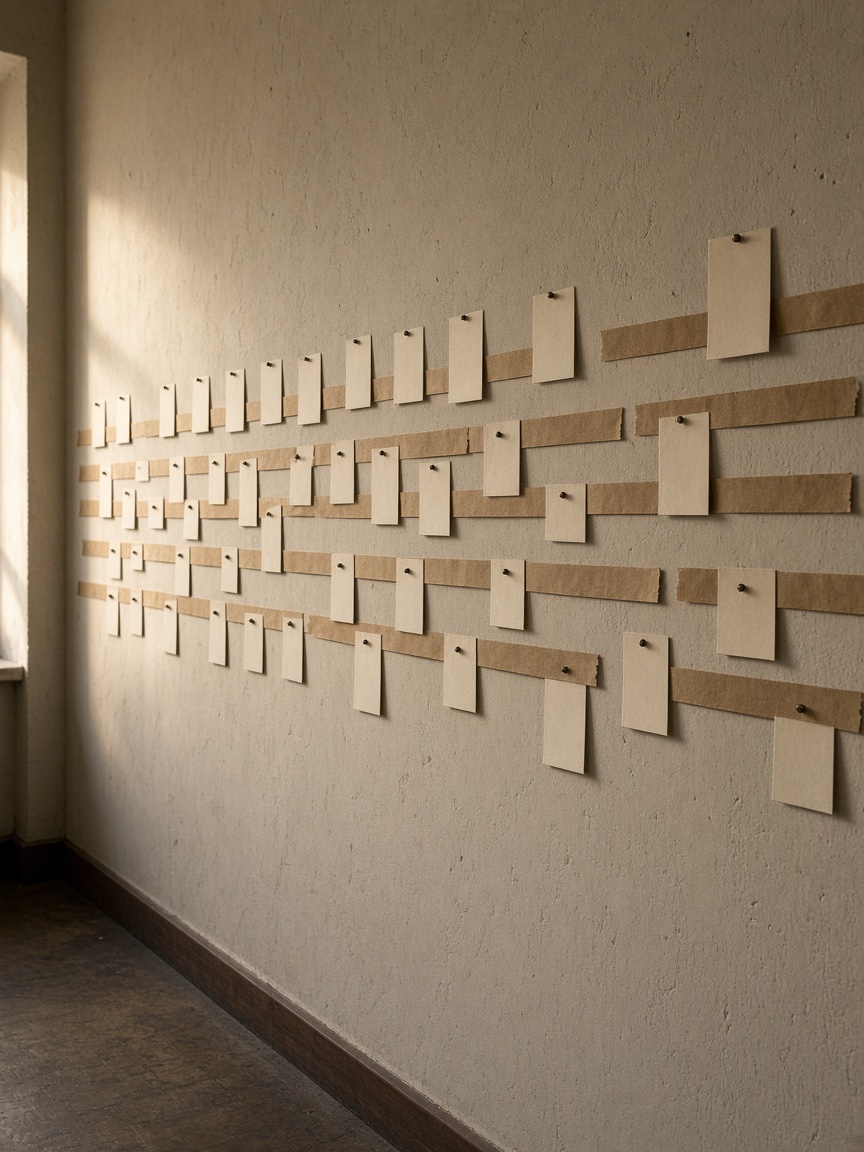
The night job lived on the timeline wall: one strip per hour from 22:00 to 05:10.
The 04:40 list
A yard a short walk from Gara Chișinău. Sheets left on 26 June 2026.
Loading is called for 04:40. By then the night list on the booth screen and the paper strip on the forklift have usually diverged. The map exists to show where they diverge, not to scold the night shift.
We did the floor walk at night, which the studio does rarely. Two people came. One stayed with the booth. One walked with the forklift. Card columns were not enough. The trouble is sequence, not role, so the job moved to the timeline wall in the side room.
Three handoffs create the gap. The booth updates the screen when a pallet is scanned. The forklift strip is written when a pallet is moved, which is not the same moment. A third note, on paper, is made if a pallet is damaged, and it reaches the booth after the list is treated as closed. The 04:40 departure uses the closed list.
The scenario note has the straight load, the damaged-pallet delay, and the departure that leaves short because the paper note is still in a pocket. The operations lead asked for a headcount cut on the same sheet. We declined, and wrote the reason in the note: the map was not finished in order to remove a person.
The right cabinet
Registration on str. Aleksandr Pușkin. Sheets left on 16 September 2026.
The door, the queue, the desk, and one cabinet are in a single room, which makes people think the process is short. It is not. The file leaves the room, goes to a cabinet the patient never sees, and has to come back the same afternoon or the visit is wasted.
We mapped the afternoon return as its own lane. The person who walks the file back is not the person at the desk. On the day we were there, that walk happened twice for the same file because the first return went to the wrong cabinet. The title of the project is the sentence the desk clerk used.
Cards for this one were simple. The difficulty was the names of the cabinets, which the staff interchange. We labeled the lanes with the place, not the nickname, and put the nicknames in the margin of the sheet so a new clerk can still read it.
The scenario note carries the straight path, the wrong-cabinet return, and the case where the afternoon file does not come back before the desk closes. The review took one morning in the hall. The clerk came. The physician did not, and the sheet says so.
The board for the cabinet map, labels still off, after the second visit.
The morning sequence, set in cards before the counter lights went on.
Before the counter opens
A bakery on bd. Ștefan cel Mare și Sfînt. Sheets left on 30 October 2026.
The public process starts when the counter opens. The map starts earlier, in the dough room, because that is where the morning is won or lost. We were in the shop at 05:50, before the lights on the boulevard were fully up.
Four people touch the morning: dough, oven, the person who sets the counter, and the person who takes money. Two of them share a role at the weekend and not on weekdays. The sheet shows both. A delivery of flour at the side door interrupts the oven lane on the days it comes, which is not every day. That interruption is the exception path.
The screen model was short. There are few systems: one till, and a paper sheet of what was baked. The till and the paper sheet do not match by 10:00. The map records the moment they are reconciled, which is after the rush, not before.
The owner wanted a future layout of the counter on the same sheet. We printed it as a separate, clearly marked sketch, not as the as-is, and only after the as-is was signed off on the wall.